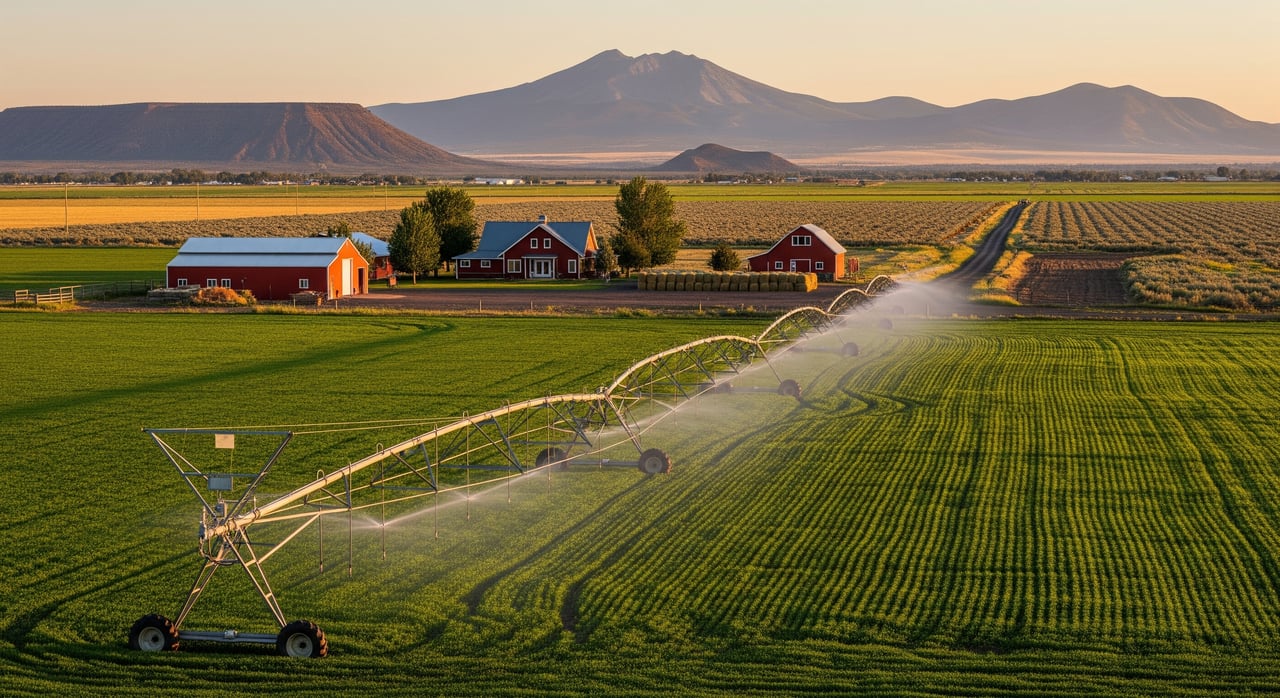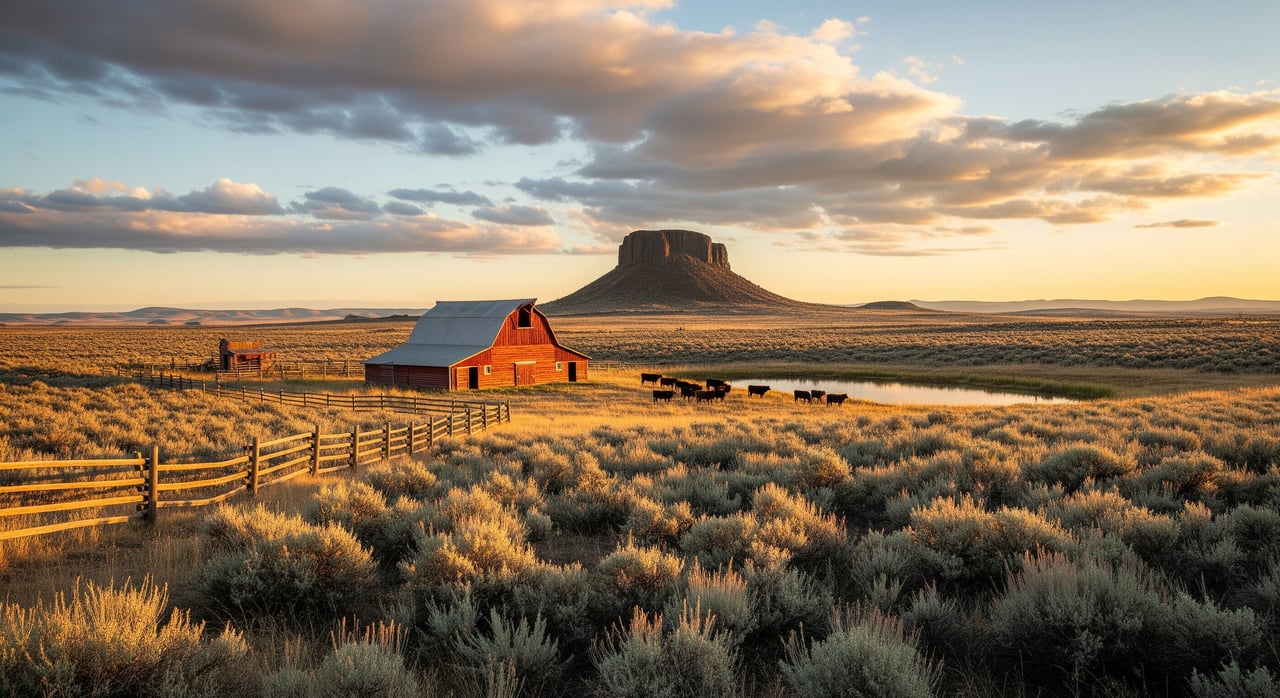
Thinking about buying a working ranch around Paulina and wondering how many cattle the land can truly support? You are not alone. Grazing capacity can make or break an operation, and the jargon can feel overwhelming when you are evaluating a property and any associated public-land permits. In this guide, you will learn the essentials of AUMs, how to estimate capacity on Central Oregon rangeland and pasture, and what to review on BLM or USFS permits before you close. Let’s dive in.
AUMs in plain language
An Animal Unit (AU) is a reference animal size, commonly a 1,000-pound cow with or without a calf. An Animal Unit Month (AUM) is the amount of forage one AU needs for one month. A common planning estimate is about 780 pounds of dry matter per AUM or roughly 26 pounds per day. That value is a practical average, not a rule. Actual needs shift with animal size, stage of production, and forage quality.
Animal equivalencies help you plan. A cow-calf pair is often treated as about 1 AUM per month. A horse typically consumes more than a cow. Sheep and goats consume less per head, with several small ruminants equaling one AUM. Use these as starting points, then refine with actual weights and feed tests.
Stocking rate vs. carrying capacity
Your stocking rate is the number of animals (or AUs) you graze per acre for a set time. It is a management choice. Carrying capacity is the long-term sustainable stocking rate that the land can support based on soil, vegetation, and climate. It is the ecological limit.
You estimate carrying capacity by looking at how much forage the land produces and how much you can remove without harming plant communities. On native rangeland, a conservative utilization rate is often 25 to 40 percent. Irrigated pasture can support higher utilization because regrowth and productivity are stronger. Always adjust for site condition and goals.
Paulina’s range conditions that affect capacity
Paulina and much of Crook County lie in a high-desert and sagebrush-bunchgrass setting. You will commonly see bluebunch wheatgrass, Idaho fescue, sagebrush, and riparian plants in draws and along creeks. Key factors that influence capacity include:
- Precipitation variability and drought risk. Year-to-year swings are common, which means you need buffer in your plan.
- Soils. Shallow or rocky soils produce less forage than deep loams.
- Elevation and aspect. These shape growing season length and species mix.
- Invasive annual grasses. Cheatgrass and medusahead can crowd out desirable forage and raise fire frequency.
- Western juniper encroachment. Juniper reduces forage production and alters water availability. Removal projects can improve production on some sites.
Also consider the difference between pasture and rangeland. Pasture is typically irrigated or seeded for higher production and can support tighter rotations. Rangeland is native plant communities managed for ecosystem function, with seasonally limited growth and longer recovery needs.
How to estimate carrying capacity
Use a step-by-step approach so you can defend your numbers and adjust over time.
1) Gather baseline information
- Soils maps, climate normals, property maps, and recent fire or drought history.
- Vegetation reconnaissance to identify plant communities and invasive species.
- If public land is part of the plan, request BLM or USFS allotment records, including authorized AUMs and monitoring reports.
2) Estimate forage production
You can measure production a few ways:
- Clip plots. Clip forage in small, representative plots, dry it, and scale to pounds per acre. This is the most reliable local method.
- Calibrated visual estimates. Useful once you have local calibration from clipped plots.
- Published production tables. NRCS and extension publications list typical pounds per acre by ecological site and precipitation class. Use these as a starting point and verify in the field.
Once you have a production number, apply a conservative utilization rate to protect plant health. For example:
- If production is 1,500 lb/acre/year and you choose 30 percent utilization, available forage is 450 lb/acre.
- Convert to AUMs: AUMs per acre = available forage ÷ 780. Here that is 450 ÷ 780 ≈ 0.58 AUM/acre.
- Inverse view: about 1.73 acres per AUM under those assumptions.
These are starting points. Refine with monitoring and adapt to weather.
3) Plan for seasonality and feed
On native range, most growth arrives in spring. Summer slows as moisture drops. Winter grazing usually needs supplemental feed or access to complementary pastures. Build in drought buffers so you can reduce stocking or secure alternative forage if a dry year develops.
4) Align with management goals and constraints
If you aim to protect riparian zones, maintain specific residual stubble heights, or conserve wildlife habitat, you will reduce utilization in those areas. Good infrastructure, like water developments and cross fencing, helps you distribute use and recover plants between grazing periods.
5) Convert AUMs into head and time
Translate AUMs into a plan that fits your herd and season. If you have 580 AUMs of usable forage in a season, you could graze about 580 cow-calf pairs for one month, or 290 pairs for two months, assuming the 1 AUM per pair planning factor. Always check animal size and condition for accuracy.
6) Monitor and adjust
Track utilization, maintain photo points, and record actual use. Adjust stocking as conditions shift. Conservative stocking during your first 3 to 5 years reduces risk while you learn site responses.
BLM and USFS permits in Crook County
Public land authorizations add opportunity and complexity. In Crook County, the BLM Prineville Field Office and the Ochoco National Forest administer most federal grazing.
Who manages what
- BLM administers many lower-elevation allotments and issues grazing permits or leases with authorized AUMs and seasons of use.
- USFS manages national forest allotments under range management handbooks and local directives.
Permit terms and changes
Permits often run for multi-year terms and come with terms and conditions. Authorized AUMs can change based on resource conditions, monitoring, or policy updates. Significant changes may involve environmental review processes. Plan for flexibility and keep your records up to date.
Transfer and base property preference
Federal grazing preference is typically linked to qualifying private base property. When base property sells, the associated preference transfer usually requires agency approval and documentation. A preference or permit is not an unrestricted property right. Use depends on compliance and resource conditions.
Due diligence documents to request
Ask the seller or agencies for:
- Current permit and authorized AUMs.
- Allotment maps, actual use logs, and monitoring reports.
- Annual Operating Instructions and inventories of range improvements with maintenance responsibilities.
- Any environmental review documents, conservation agreements, or pending appeals.
- Fee statements and any required improvements or assessments.
Operational constraints that affect usable AUMs
- Wildlife and riparian protections can limit season of use or reduce AUMs in certain pastures.
- Rotations and rest periods specified in the permit or AOI shape when and how you can graze.
- Infrastructure like fences, pipelines, and water troughs determines whether you can distribute use to match the authorized numbers. Without functional improvements, practical use can be lower than paper authorization.
Financial notes
The federal grazing fee is set by formula and can change annually. It is often lower than private lease rates, but you still need to budget for maintenance and any required improvements. Confirm the current fee with the managing agency.
Practical planning for Paulina ranch buyers
A strong plan aligns your herd, season, and infrastructure with what the land can sustain.
- Start conservatively. Stock below your calculated capacity while you build a monitoring record.
- Map infrastructure. Verify fences, gates, and water points on private ground and allotments. Repairs or additions can improve distribution and capacity.
- Protect sensitive areas. Identify riparian reaches and wildlife timing windows and plan rotations that avoid damage.
- Build drought contingencies. Line up supplemental feed sources and off-lease options. Decide in advance what triggers reductions.
- Manage vegetation. Consider juniper removal, invasive annual grass control, and seeding desirable perennials where appropriate. Some projects need permits or qualify for cost-share programs.
- Document everything. Keep annual use logs, utilization checks, and photo points to demonstrate compliance and track trend.
Buyer due diligence checklist
Use this short list as you evaluate a property or prepare for closing:
- Property data: Soils mapping, water rights and irrigation permits if present, easements, recent fire history.
- Grazing files: Current BLM or USFS permit, authorized AUMs, allotment map, actual use records, recent monitoring and AOIs, list of range improvements and maintenance assignments.
- Production information: Clip plot results or recent forage estimates by pasture or ecological site, invasive species notes, and any post-fire rehab plans.
- Legal and policy items: Whether grazing preference is attached to base property, transfer steps, pending environmental reviews or litigation that could alter AUMs, and seasonal restrictions.
- Financials and obligations: Current federal grazing fee, outstanding assessments, and required improvements.
Common pitfalls to avoid
- Treating authorized AUMs as guaranteed. Actual usable AUMs depend on forage, infrastructure, and compliance.
- Skipping local sampling. Production tables are helpful, but clip plots on your ground give you the confidence to right-size your herd.
- Ignoring seasonality. Spring flush will not carry a summer without planning for rest and water distribution.
- Underestimating infrastructure. Cross fencing and water points are often the difference between overgrazed bottoms and evenly used pastures.
- Waiting to cut numbers. In drought, early reductions protect rangeland health and long-term capacity.
The bottom line for Paulina buyers
If you are evaluating a ranch in the Paulina area, you will make your best decision by pairing clean AUM math with on-the-ground measurement and agency due diligence. Start with 780 pounds per AUM as a working estimate, apply conservative utilization, and verify with clip plots. Review all BLM or USFS files, understand seasons of use, and map out the infrastructure that will let you distribute cattle and protect sensitive ground. That approach leads to healthier range and fewer surprises after closing.
If you want a second set of eyes on capacity, permits, or infrastructure planning, reach out to Jerry W Hicks. Our team brings hands-on ranch management experience and a practical, stewardship-first mindset to every evaluation.
FAQs
What is an AUM and why does it matter?
- An AUM is the forage one 1,000-pound cow needs for one month, commonly estimated at about 780 pounds of dry matter; it is the basic unit for planning stocking and comparing properties.
How many acres per cow in the Paulina area?
- It depends on forage production, utilization, and season length; use the formula AUMs per acre = (forage pounds per acre × utilization) ÷ 780, then convert to head and months.
Are BLM or USFS authorized AUMs guaranteed to stay the same?
- No, agencies can adjust authorized use based on monitoring, resource conditions, and management plans, so build flexibility into your operation.
Does buying base property automatically transfer public-land grazing?
- Base property is typically required for preference, but transfers need agency approval and compliance with permit terms before you can use the AUMs.
How should I plan for drought on Central Oregon rangeland?
- Stock conservatively, monitor forage closely, and line up supplemental feed or lease options so you can reduce numbers early if conditions tighten.
What documents should I request before closing on a ranch with permits?
- Ask for current permits and authorized AUMs, allotment maps, actual use records, monitoring reports, AOIs, range improvement inventories, and any pending reviews or appeals.